US says nuclear sanctions are toughest ever; Iran’s leader dismisses them as ‘annoying flies’
UNITED NATIONS — The U.S. and its allies scored a long-sought victory Wednesday by pushing through new U.N. sanctions over Iran’s nuclear program, punishments Tehran dismissed as “annoying flies, like a used tissue.”
The sanctions target Iran’s powerful Revolutionary Guard, ballistic missiles and nuclear-related investments. Oil exports, the lifeblood of Iran’s economy, are not affected because targeting them would have cost the U.S. essential support from Russia and China.
President Barack Obama said the sanctions are the toughest Iran has ever faced. They required several months of difficult negotiations by the five veto-wielding permanent U.N. Security Council members — the U.S., Russia, China, Britain and France — and non-member Germany. This is the fourth round of sanctions aimed at getting Iran into serious discussions on its nuclear ambitions.
“Actions do have consequences, and today the Iranian government will face some of those consequences,” Obama said. He left the door open to diplomacy but said Iran “will find itself more isolated, less prosperous and less secure” unless it meets its obligations under the Nuclear Nonproliferation Treaty.
Iranian President Mahmoud Ahmadinejad, on an official visit in Tajikistan, dismissed the new resolution.
“From right and from left, they adopt sanctions, but for us they are annoying flies, like a used tissue,” he said.
Tehran insists its program is peaceful and aimed at producing nuclear energy. The U.S. and its allies say Iran is trying to produce nuclear weapons; they want Iran to suspend uranium enrichment and start negotiations aimed at ensuring that it uses nuclear technology only for peaceful purposes.
The new resolution bans Iran from pursuing “any activity related to ballistic missiles capable of delivering nuclear weapons,” bars Iranian investment in activities such as uranium mining and prohibits Iran from buying several categories of heavy weapons including attack helicopters and missiles. Iran, however, already has most of what it would need to make a weapon.
Iran’s top nuclear negotiator, Saeed Jalili, warned that “choosing the option of confrontation will bring Iran’s resolute response,” according to Iran’s official news agency. He did not elaborate.
Iran’s U.N. Ambassador Mohammad Khazaee accused the United States, Britain and their allies of abusing the Security Council to attack Iran.
“No amount of pressure and mischief will be able to break our nation’s determination to pursue and defend its legal and inalienable rights,” Khazaee said. “Iran is one of the most powerful and stable countries in the region and never bowed — and will never bow — to the hostile actions and pressures by these few powers and will continue to defend its rights.”
U.S. Ambassador Susan Rice dismissed Khazaee’s statement as “ridiculous … reprehensible, offensive, and inaccurate” and declared that “these sanctions are as tough as they are smart and precise.”
The resolution was approved by a vote of 12-2 with Lebanon abstaining and Brazil and Turkey voting “no.” Turkey and Brazil, both non-permanent council members, brokered a fuel-swap agreement with Iran that they offered as an alternative solution to concerns Tehran may be enriching uranium for nuclear weapons.
Lebanon’s U.N. Ambassador Nawaf Salam said he abstained because the government failed to “reach a final position.” A U.N. diplomat, speaking on condition of anonymity because the government debate was private, said the Cabinet was split, 14-14, on whether to vote no or abstain.
The sanctions put Iran in the unusual position of bashing key allies China and Russia. Both countries voted for the resolution and either could have vetoed it. Ahmadinejad warned Russian leaders last month “to correct themselves, and not let the Iranian nation consider them among its enemies.”
In Moscow, the Itar-Tass news agency reported that Ahmadinejad will not take part in the summit of the Shanghai Cooperation Organization in Uzbekistan beginning Thursday. The group was created in 2001 to address religious extremism and border security in Central Asia, and has grown into a bloc aimed at defying U.S. interests in the region.
Ahmadinejad is scheduled to tour the World Expo in Shanghai this week, but is not expected to hold talks with senior Chinese leaders.
Iran holds more leverage over China, which needs Iran’s oil and gas to feed its growing energy appetite, than it does over Russia, which has long provided important technology to Iran including building the country’s first nuclear reactor. The facility is expected to begin electricity production this summer.
The Security Council imposed limited sanctions in December 2006 and has been ratcheting them up in hopes of pressuring Iran to suspend enrichment and start negotiations on its nuclear program. Iran has repeatedly defied the demand and has stepped up its activities, enriching uranium to 20 percent and announcing plans to build new nuclear facilities.
The new resolution imposes sanctions on 40 Iranian companies and organizations — 15 linked to Iran’s Revolutionary Guard, 22 involved in nuclear or ballistic missile activities and three linked to the Islamic Republic of Iran Shipping Lines. That more than doubles the 35 entities that had been subject to an asset freeze.
The sanctions add one individual to the previous list of 40 Iranians subject to an asset freeze — Javad Rahiqi, who heads the Atomic Energy Organization of Iran’s Esfahan Nuclear Technology Center. All 41 individuals will also now be subject to a travel ban.
Rahiqi declined to comment when contacted by The Associated Press.
The resolution also calls on all countries to cooperate in cargo inspections — which must receive the consent of the ship’s flag state — if there are “reasonable grounds” to believe the cargo could contribute to the Iranian nuclear program.
On the financial side, it calls on — but does not require — countries to block financial transactions, including insurance and reinsurance, and to ban the licensing of Iranian banks if they have information that provides “reasonable grounds” to believe these activities could contribute to Iranian nuclear activities.
U.S. Defense Secretary Robert Gates said Tuesday that new sanctions would pave the way for tougher additional measures by the U.S. and its allies. France’s U.N. Ambassador Gerard Araud said after Wednesday’s vote that European Union foreign ministers will be meeting on Monday and France would like “a tough translation of the resolution,” but it’s up to the 27 countries to decide on additional sanctions.
Israel’s ambassador to the United States, Michael Oren, said the resolution “can serve as a viable platform” for nations to launch sanctions such as restrictions on Iran’s ability to import gasoline. “They have a lot of oil, but not a lot of refined oil or the ability to export oil abroad,” he said.
The U.N. resolution was approved despite an Iranian diplomatic offensive launched in April. Jalili visited Beijing that month in the wake of U.S. reports saying China had dropped its opposition to possible new U.N. measures against Iran.
Iran also approached several non-permanent Security Council members, including Bosnia, Brazil, Turkey and Uganda, in hopes of averting new sanctions. Inviting diplomats from all 15 members of the Security Council to a two-hour dinner in New York in May was seen as Iran’s high-profile attempt to head off additional penalties.
China’s U.N. Ambassador Li Baodong said after the vote that the sanctions were aimed at curbing nonproliferation and would not affect “the normal life of the Iranian people” nor deter normal trade activity, a view echoed by Russia’s U.N. envoy Vitaly Churkin.
The five permanent council members and Germany, in a statement after the vote, reaffirmed their “determination and commitment to seek an early negotiated solution to the Iranian nuclear issue … which would restore international confidence in the peaceful nature of Iran’s nuclear program.” It welcomed and commended “all diplomatic efforts in this regard, especially those recently made by Brazil and Turkey.”
Brazilian President Luiz Inacio Lula da Silva said the new sanctions were “a mistake” implemented “just for spite.” According to the state-run Agencia Brasil news agency, Silva said the resolution’s supporters “threw out an historic opportunity to peacefully negotiate the Iranian nuclear program” — the fuel-swap agreement his country and Turkey had championed.
Under the proposal, Iran would swap some of its enriched uranium for fuel for a research reactor in Tehran. The U.S., Russia and France have said that — unlike the original plan drawn up eight months ago — the proposal would leave Iran with enough material to make a nuclear weapon.
The three countries sent a letter to the International Atomic Energy Agency seeking clarifications from Tehran, and several council ambassadors said they would still like to see the swap go ahead. Lebanon’s Salam called it “a gateway for confidence building measures.”
“We believe that the sanctions resolution is a painful failure of diplomatic efforts,” Salam said. “We refuse to give up. We call on all states … to reinitiate and intensify diplomatic efforts.”
The new sanctions should bring little direct political fallout for Ahmadinejad. The country has been deeply polarized since last June’s disputed presidential election — which the opposition claims was rigged by vote fraud — and Ahmadinejad’s backers are likely to use the sanctions as a rallying cry.
In Venezuela, President Hugo Chavez condemned the measures against Iran, his close ally.
“Why won’t they sanction Israel? You realize the cynicism of the Yankee empire and its allies in the world,” Chavez said in a televised speech Wednesday night. “Israel massacres, kills, doesn’t comply with United Nations resolutions … and the United Nations acts as if nothing had happened.”
Associated Press Writers George Jahn in Vienna, Matthew Lee in Quito, Ecuador, Peter James Spielmann at the United Nations, Beth Fouhy in New York City, Mark Lavie in Jerusalem and Olga Tutubalina in Dushanbe, Tajikistan contributed to this report.

Posted by: vepemotevi at
04:42 AM
| No Comments
| Add Comment
Post contains 1613 words, total size 11 kb.
Four Photography And Art Apps. For iPhone And iPad
• Layers for iPhone 2.2 - Layer Transparency, Brush Offset and More
• MonoPhix HD 1.0 Black and White Photography Tool for iPad
• Omnisketch 1.1 Makes Drawing Pictures Easy On Your iPad.......
Tags: | | | |

Posted by: vepemotevi at
03:22 PM
| No Comments
| Add Comment
Post contains 50 words, total size 1 kb.
Google Background Image Added for New look Google Homepage
Have you noticed the left blue color in Google Homepage — change background image. Lately the search engine ace has started paying heed to its minor rival, Bing that flaunts of an panoramic backdrop. What’s exciting, the age-old, white-washed Google homepage background can now be given a picturesque look by adding a background image to the search page. For all on the web, Google is indispensably the daily hang out, which necessitates the change for a better look and feel of the search homepage. It’s high-time to get-rid of the monotonous deluge of white Google background, especially when you some cool alternatives. We provide you the options for photos that you can insert in Google homepage background.
Here are options from where you can choose your Google background image
1. My Picasa Web Photos -Â Â your computer
2. My Computer - From the images in your computer
3. Public Gallery - Funny Images are free from copyright
4. Editor’s Picks -Â Collection form Google editors selection that will offer daily coolwallpapers
Take a look at some of the Google background image samples
With a cool Google background, you have another good reason to quit Bing
Posted by: vepemotevi at
02:02 AM
| No Comments
| Add Comment
Post contains 204 words, total size 2 kb.
January 19, 2013
Things for iPad Review

The big interface helps productivity... except when it omits a feature.
Known as one of the premier organizational to-do apps on Mac and iPhone, Things sits in iPad limbo. Is it a stand-alone task-management tool with features that fully match the strong ? No. Is it just an extension of Things for Mac, designed to mostly sync data for mobile use? Not really. Things for iPad gives lip service to both audiences without fully serving either. It omits features--crucial to some--that you'd need in a stand-alone tool, and at $20, it's far too pricey to just be a way to bring the desktop data outside. At least the core to-do list functionality shines through; even in this waffling 1.0.1 version, Things for iPad can help boost your productivity.
Loosely related to the methodology, Things is flexible enough to fit most workflows. You'll create to-do entries, projects with multiple steps, and schedule items. Complete a step, and cross it off; it's good organization at its simplest. You can shuffle items between key areas, such as putting some in today's view to focus on just a few at a time. Scheduled items can even hide in an upcoming area and automatically appear on a specific date.

Different list views help corral to-do entries.
If you have the Mac version of the software, Things for iPad syncs the data over, keeping both editions current with your life. It worked well in our tests. With the desktop software open, every time we launched Things for iPad, the two found each other on the local network.
But you can only access several important features on Things for Mac and then sync them over. For example, recurring events--"take out the garbage each Wednesday"--require the Mac software. Ditto that for customized folder headings that essentially group aliases of to-dos.
Things for iPad misses other key interface features. You can't simply drag single (or multiple) items into new areas; you have to tap them and select a new destination. Worse, there's no search functionality, and bizarrely, you can't create lists that aren't Projects, a restriction that will seriously irk users of Things on other platforms. Cultured Code says it will address most (or all) of these in an update, but it's been almost two months since the app was released, and the company was unable to confirm a timeframe for an update that is absolutely essential for rounding out this half-baked, under-featured, and significantly overpriced app. We know this developer can do great things, and we're hoping the 1.1 update of this iPad app will realize its full potential.
Posted by: vepemotevi at
12:42 PM
| No Comments
| Add Comment
Post contains 434 words, total size 3 kb.
January 18, 2013
Alternative sites to check out on Quit Facebook Day
Happy Quit F
acebook Day.Â
Think of the endless invitation to Mafia Wars or pleas to search for a missing cow on Farmville, not the constant updates from friends who just have to tell the world that they “just can’t wait for Friday†or that a “Sausage, eggs and mee goreng and a cup of Nescafe Gold†[...]
Posted by: vepemotevi at
11:02 PM
| No Comments
| Add Comment
Post contains 65 words, total size 1 kb.
Apple Presents iPhone 4; Will Debut iAds July 1

All-new iPhone design is the thinnest smartphone ever with FaceTime video calling, Retina Display, 5 megapixel camera & HD video recording. iAds have over $60 million in 2010 commitments from leading global brands.......
Tags: | | |

Posted by: vepemotevi at
09:42 AM
| No Comments
| Add Comment
Post contains 46 words, total size 1 kb.
January 17, 2013
Boost Web design and site traffic for free
Ever wondere
d how people get those cool real-time photo-linked timeliness on their sites? How about those crazy montage of jumble-up words or those fantastic looking graphs and charts? Must cost the publishers a bundle?
Not really. Kim Pittaway, a Toronto-based journalist, media consultant and digital content expert, recently let on a bunch of editors and Web [...]
Posted by: vepemotevi at
08:22 PM
| No Comments
| Add Comment
Post contains 64 words, total size 1 kb.
Google Caffeine: A New Search Index to Challenge Bing
Finally Google has unveiled the next generation architecture for web search. The new infrastructure Caffeine would speed up indexing while preserving accuracy and comprehensiveness. Although it might be difficult for general users to find difference in search result, Web developers would easily identify a few differences with the Caffeine Web indexing system.
Before rolling out, Caffeine underwent extensive testing phase. Google along with its several data centers tested Caffeine for almost 10 months. The strenuous task was carried out in order to yield a fresh new indexing system that hugely differs from the previous one.
Caffeine is undoubtedly a menacing news for rivals of Google since it’s capable of faster search than Bing of Yahoo and many others. But Google has denied any other intention behind bringing Caffeine than helping its users.
Google software engineer Carrie Grimes said,
Content on the Web is blossoming. It’s growing not just in size and numbers but with the advent of video, images, news and real-time updates, the average Web page is richer and more complex. In addition, people’s expectations for search are higher than they used to be. Searchers want to find the latest relevant content and publishers expect to be found the instant they publish.
Grimes also mentioned that 100 million gigabytes of storage is required to accommodate Caffeine in one database. Perhaps you need 625,000 of the largest iPods to store hundreds of thousands of gigabytes of fresh content that Caffeine adds each day.
Lets delve into how Caffeine works. Well, you would be glad to know that Caffeine processes millions of pages in parallel. If you consider piles of papers, it would grow three miles taller every second.
Caffeine is built to meet ever rising expectations of the users. It’s been several times that Google received complaint for its old indexing system that very often fails to refresh a page in time. While some of the layers were refreshed faster, others took couple of weeks for update. With Caffeine, Google would be able to update their search index continuously. New pages, or new information on existing pages would be added to the index as soon as they are made available on the web. That means, you would get fresher information than ever before.
Caffeine is coming only one month after Google launched its fresh search user interface that brings new options to the users for slice and dice results. Now with this new search service Google is expecting to increase its search share which is currently sticking at 65 percent.
Posted by: vepemotevi at
07:02 AM
| No Comments
| Add Comment
Post contains 429 words, total size 3 kb.
January 16, 2013
The iPad is making appearances all over the White House
The iPad is making appearances all over the White House
by on Jun.11, 2010, under

So if you’re wondering why it’s taking sooooooo long for any movement on health care reform or DADT it’s because the entire White House staff is obsessed with Scrabble on their iPad’s. Just kidding. Sort of.
According to the Washington Post everywhere you look in the White House these days you see an iPad. Specifically, almost  everyone in the West Wing office of White House Chief of Staff Rahm Emanuel has an iPad or an iPad on order. I guess White House security clearance doesn’t get you an iPad any faster than anyone else when there are shortages.
“Emanuel just got his, as did senior adviser and deputy press secretary Bill Burton. Both communications director and press wrangler Ben Finkenbinder have one on order. Economic adviser takes his to staff meetings.”
So of course, the Post wanted to know what apps everyone was using. I mean isn’t that the first thing you ask your friends when you’re talking about your iPads? “Summers has the Bloomberg app for financial information, says adviser Matt Vogel. Also Scrabble. And the first book he downloaded was a free copy of “The Federalist Papers.” Burton, who has been a bit of an iPad evangelist at the White House, has the app for Vanity Fair magazine, Scrabble, a news app and the entire last season of ABC’s “Lost.” Emanuel has “all the newspaper apps,” says a top aide, and has installed the iBooks app so he can read books on the device. Axelrod has only downloaded a couple of apps so far, his assistant, Eric Lesser, said. They include the Major League Baseball app and the National Public Radio one.
There’s no word on whether or not Mr. President himself has adopted an iPad, but we do know in the past his allegiance was to the Blackberry. Â But he’s got to be a bit jealous when he sees Joe Biden on his.

Posted by: vepemotevi at
05:32 PM
| No Comments
| Add Comment
Post contains 339 words, total size 3 kb.
NEW BRUNSWICK RELEASES 21ST CENTURY LEARNING PLAN
New Brunswick releases 21st century learning plan
On May 14th the Anglophone sector of the New Brunswick Department of Education released its proposal on how to shift our public education system to a 21 st Century learning model. The plan was developed using a co-leadership model with principals and district leaders, and the consultation document will now be used to engage our teachers.
 As New Brunswick teachers were each allocated a notebook computer, for the first time in history we were able to forward a copy of a draft learning strategy to every teacher, for their advice and counsel.
The plan, entitled 21st Century Learning (NB3-21C) is available for review at our departmental website:.
While the three year plan is quite comprehensive, four key elements are emerging as critical pillars to success. Let’s call them the CRT2 formula, where C is Creativity, R is Relevance; the first T is Time and the second, Technology.
Creativity
Â
Public education in the industrial era was founded on discipline and facts. In the 21st Century individual and societal success will be founded on creativity. Creative thinkers will be in demand to guide business innovation and to solve complex societal issues, some of global proportions. Â NB3-21C is designed to produce creative problem solvers. Today, creativity trumps regurgitation of facts. Facts you can access on the internet.
Relevance
The OECD, EU, Partnership for 21st Century Skills in the United States, and many authors are calling for significant changes to what students learn and how teachers teach. NB3-21C calls for a complete assessment of our Essential Graduation Requirements, curricula outcomes and instructional practices to determine which ones are truly relevant to the 21st Century learner.Â
Â
Time
Last year, 50% percent of the students at a local high school missed 50% of their classes in December. When asked to explain why, they stated that school was a waste of their time. Â
The response is an alarm bell from two perspectives. First, the students found school irrelevant to their needs (see above). Secondly, students value their time.
Society invests millions of dollars every year in educating our youth, so of course we value their time. But do we give serious consideration to and value every minute they are giving us? There is urgency here. We need to position each and every child to reach their full potential, within a set time allotment.
New Brunswick’s school calendar equates to roughly 170,000 minutes of instruction between kindergarten to grade 12. We have students at school for only 170,000 minutes! Throw in a few snow days and instruction time decreases accordingly. For NB3-21C to be successful, we will be examining our school calendar, instruction time allocations, lessons, activities, instruction, and learning environment in an effort to make every instruction minute engaging to and relevant for our students. Â
And at the same time, we know we need to strike the right balance between a student’s instruction time, and our teachers having the time to plan for instruction. Seeking the advice of our teachers on this issue will be critical to finding solutions.
Technology
The 21st Century Age of Knowledge is rooted in rapid advancements in information and communications technology. ICT facilitates access to information for every student via the internet. We intend to create ICT rich learning environments because students deserve to have access to the tools of their generation in the classroom.
NB3-21C’s focus is on producing creative problem solvers, being relevant to our students and using their time wisely. This will include creating ICT rich learning environments, where each student can access information at his or her own speed of learning.
John D. Kershaw
Deputy Minister
Department of Education
New Brunswick, Canada
(Anglophone Sector)
David M. Kershaw
Masters, Computer Science
Halifax, Nova Scotia
Posted by: vepemotevi at
04:12 AM
| No Comments
| Add Comment
Post contains 636 words, total size 5 kb.
January 15, 2013
Competitors of the electronic medical records keepers Allscripts and Eclipsys, at a glance
Allscripts-Misys Healthcare Solutions’ planned buyout of Eclipsys would make it one of the largest public companies focusing on electronic health records, with a vast network of hospitals and physicians. Their combined revenue for 2009 was almost $1.07 billion.
Here are some competitors:
Cerner Corp., based in North Kansas City, Mo., focuses on technology used to share medical data between a range of providers, including physicians, pharmacists, and administrators. The company had revenue of $1.67 billion in 2009.
Athenahealth Inc., based in Watertown, Mass., focuses on billing and claims management and electronic patient medical records at physician practices. It had $188.5 million in revenue in 2009.
Computer Programs and Systems Inc., based in Mobile, Ala., focuses on medical records technology for small and midsize hospitals. It had revenue of $127.7 million in 2009.
Quality Systems Inc., based in Irvine, Calif., has an electronic medical records practice. The company had $291.8 million in revenue in 2009.
McKesson Corp., based in San Francisco, makes the overwhelming majority of its revenue from distributing medical products and pharmaceuticals. It also has a technology unit that focuses on electronic medical records.
Source: Capital IQ
Posted by: vepemotevi at
02:52 PM
| No Comments
| Add Comment
Post contains 201 words, total size 2 kb.
Twitter to start using own link shortener, t.co, to shrink Web addresses starting this summer
Twitter to use own Web link shrinker this summer
SAN FRANCISCO — Twitter plans to start using its own Web link shortener on addresses that users include in tweets.
Starting this summer, Twitter will use its new “t.co” domain name to shorten links that users post directly on Twitter.com or through applications such as TweetDeck. That will help the posts stay within the service’s 140-character limit. The company is currently testing its linking technology with some employee accounts.
Users won’t always see their links displayed as “t.co” addresses, though. If you get Twitter updates sent to your phone via text messaging, a link might show up as a “t.co” address. But you might see the full address or the Web page’s title when looking at that same post on Twitter.com.
“Ultimately, we want to display links in a way that removes the obscurity of (a) shortened link and lets you know where a link will take you,” Twitter spokesman Sean Garrett wrote on Twitter’s blog Tuesday.
Garrett said that this method of packaging links is meant to improve user safety and will help Twitter gather data for its “promoted tweets,” which are Twitter posts paid for by advertisers to appear in search results on the site.
He also noted that in March, Twitter started using its own “twt.tl” address to automatically channel links that users sent in messages directed specifically at another user. That was a way for Twitter to spot and cut down on the spread of malware and other unsavory content that links can lead to; Twitter can simply disable a “twt.tl” address if it led to a questionable site.
Twitter used to automatically shrink links on tweets as well — first using TinyURL, later using bit.ly — but the site doesn’t currently do so. So if you want to share a long link with friends, you’d have to go to TinyURL, bit.ly or another service to shorten the link first.
Even after Twitter implements “t.co,” Garrett said that users will still be able to use link shorteners of their choosing. This means you should still be able to take advantage of traffic analysis and other features that come with those services. But those shortened links will be converted into a “t.co” address.
The effect of Twitter’s move on existing link shorteners is likely to be small. After all, they are also commonly used in e-mails, Facebook posts and other settings.
Posted by: vepemotevi at
01:22 AM
| No Comments
| Add Comment
Post contains 418 words, total size 3 kb.
January 14, 2013
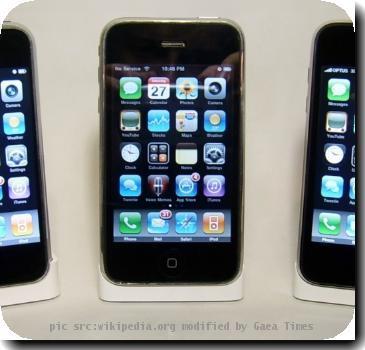
Top 10 benefits of iPhone 4 over iPhone 3GS
By Partho, Gaea News Network
Wednesday, June 9, 2010
 “iPhone 4 is the biggest leap since the original iPhone,” said Apple CEO, Steve Jobs, while unveiling the fourth-genration iPhone at WWDC. Apple’s iPhone has achieved a phenomenal success world-wide, evolving into the most advanced mobile phone in its successive generations. A year ago, Apple launched its iPhone 3GS model featuring a camera with higher resolution and video capability, voice control, and support for 7.2 Mbps HSDPA. The successor iPhone 4, turns the dream of video calling into reality. Apple’s innovative new Retina display and the highest resolution display ever built into a phone, ensures crisp text, images and video. Additionally, iPhone 4 features a 5 megapixel camera with LED flash, HD video recording and a 3-axis gyro and up to 40 percent longer talk time. All this comes in an scintillating all-new design of glass and stainless steel encasing the slimmest smartphone on this planet. The fourth-generation of iPhone comes with world’s most advanced mobile operating system - iOS 4, which includes over 100 new features and 1500 new APIs for developers. Before you bet your money to go for superior iPhone 4, you need to have a look at the top advantages it offers over iPhone 3GS. We draw the top 10 iPhone 4 Vs iPhone 3GS comparision of features.
1. Display
iPhone 4 retains the size of 3GS with a 3.5 inch diagonal. It’s completely different with 4 times as many pixels with the so-called retina display. Not just that iPhone 4 flaunts a 4 times the pixels of earlier iPhones, you can feel the difference between the glass you touch and the pixels that are removed.
The 3GS offers a 480×320 pixel resolution at 163ppi. While the iPhone 4 receives a significant bump up providing 960 x 640-pixel resolution at 326ppi and an 800:1 contrast ratio. The screen isn’t OLED as with some other smartphones. While the screen isn’t OLED as with some other smartphones. Apple claims its IPS display technology is better.
2. Storage
The iPhone 4 is available at capacities of 16 GB and 32 GB. The iPhone 3GS has regressed with a new 8GB of memory model apart from the 16GB and 32 GB models. This looks a bid to woo the customers on budget looking for the defunct iPhone 3G.
3. Camera
iPhone 4’s camera is a much-hyped issue, especially with the HD video recording facility. But, it won’t match the best camera phones. Still its excels the 3 megapixels iPhone 3GS with 5 megapixels camera and an added LED flash. What’s more, you have a front-facing camera for FaceTime Wi-Fi video calls and more.
4. HD Video recording
With a Flip Mino HD like video quality iPhone 4 is a giant leap in terms of video recording. The 3GS also supported video recording but it was VGA. iPhone 4 received a 720P is a real bump up to a 5 megapixel camera with a nice addition although at this size any further megapixel increases do become a bit silly due to lens size.
5. Wireless and data
iPhone 4 goes a step ahead of 3GS to adds 802.11n along with 802.11b/g and Bluetooth 2.1. The 7.2Mbps HSDPA, 3G and EDGE specs continue to feature in the iPhone 4.
6. Sleek design
As Steve Jobs’ claims, Apple iPhone 4 is the sleekest mobile on earth. Just 9.3mm in thickness, 24% thinner than the iPhone 3GS, the Jony Ive (iPhone 4). iPhone 4 measures 0.37 inch deep whereas iPhone 3GS’s thickness stands at 0.48 inch. Further, iPhone 4 is slightly narrower, 2.31 inches to 2.44 inches. The two models weigh the same 4.8 ounces, still the tweaks to the dimensions make the iPhone 3GS seem more sludgy in comparison to the newest iPhone.
7. 3 axis Gyro
The most advanced feature added to iPhone 4 is the 3-axis gyro that takes motion-sensing in mobiles to a new level. When paired with the accelerometer, iPhone 4 can perform advanced motion sensing such as user acceleration, angular velocity and rotation rate. With the inclusion of gyro, iPhone 4 will offer motion gestures and greater precision to elevate the gaming experience.
8. External buttons and inputs
Overall iPhone 4 inherits the same form factor and buttons, but it adds an extra mic button to offer better call quality through noise cancellation. Evidently there has been no alterations in the button sizes or location, but the volume of button has been separated into up and down.
9. Power and battery
According to Apple CEO iPhone 4 offers a 40% improvements in its battery performance over the 3GS model. With a 7 hours talk time on 3G, iPhone 4 exceeds 5 hours on the 3GS. The standby time nears 300 hours, which is same for the 3GS.
Users can expect an hour more on browsing and 10 hours more audio playback with the video unchanged at 10 hours.
10. iOS 4 and multitasking
One of the greatest advantages with iPhone 4 is the iOS 4 operating system that supports multitasking, details of which you can read in our. The iOS 4 includes over 100 new features and 1500 new APIs for developers. What’s more, iPhone 4 with iOS 4 will ensure that multitasking doesn’t hamper the performance or battery life. Steve Jobs demonstrated that the services such as Pandora and navigation running in background while other apps were running in the foreground.
Those using Apple iPhone 3GS can go for an upgraded to iOS 4 as soon to be available on in iTunes 9.2 for Mac OS X and Windows in a while or June 21st. Alternately users can go for a iPhone 3GS 4.0 jailbreak.
Posted by: vepemotevi at
11:52 AM
| No Comments
| Add Comment
Post contains 956 words, total size 6 kb.
January 13, 2013
Analyst sees Apple’s iPhone on the T-Mobile network as soon as this fall
Ahead of the Bell: Apple’s iPhone on T-Mobile?
NEW YORK — The iPhone will be available on other cell phone networks as early as this fall and will likely come first to T-Mobile USA, one analyst who follows Apple Inc. closely said Thursday.
In a note to investors, Kaufman Bros. analyst Shaw Wu said his checks with Apple suppliers and others suggest AT&T Inc. will lose its exclusive place as the iPhone carrier no later than the first half of next year.
One reason T-Mobile is a likely candidate is because the company’s wireless technology is similar to AT&T’s. Sprint and Verizon Wireless use a different wireless standard, so converting the iPhone to run on their networks would presumably involve more technical hurdles.
Wu said T-Mobile also sees the iPhone as key to winning back lost customers, meaning the company will be more likely to settle for Apple’s terms.
“T-Mobile does not comment on rumor or speculation,” T-Mobile USA spokesman Peter Dobrow said Thursday.
“Would we like to offer the iPhone to T-Mobile customers in the U.S.? You bet. Ultimately though it is Apple’s decision on who carries its product,” Dobrow added.
In any case, Wu said, Apple needs to sign up another U.S. carrier to keep up the pace of iPhone sales and counter the rising competition of phones that run on Google Inc.’s Android software.
Neither Apple nor AT&T have said when their exclusive deal is slated to end.
In midday trading, U.S.-listed shares of T-Mobile parent Deutsche Telekom rose 40 cents, or 3.7 percent, to $11.33 amid a broader market rally. AT&T shares were up 44 cents at $25.34, while Apple climbed $3.26 to $246.46.
Posted by: vepemotevi at
10:32 PM
| No Comments
| Add Comment
Post contains 291 words, total size 2 kb.
74kb generated in CPU 0.0162, elapsed 0.0954 seconds.
30 queries taking 0.0844 seconds, 108 records returned.
Powered by Minx 1.1.6c-pink.




 Alcatel-Lucent announced on Wednesday that they are going to launch 100 gigabits per second optical networking technology. 100 Gbps wavelength means that the technology can transfer more than 100,000 MP3 files in 60 seconds or more than 15,000 HDTV channels streamed live. The company said they are using its Next-Generation Coherent technology. The optical gear is designed to handle the bandwidth that is required for Web video, file sharing and movie downloads and the company already sold 100 gbps equipment to a customer.